


2026 Toyota Tundra Towing Capacity: Ratings by Trim and Powertrain
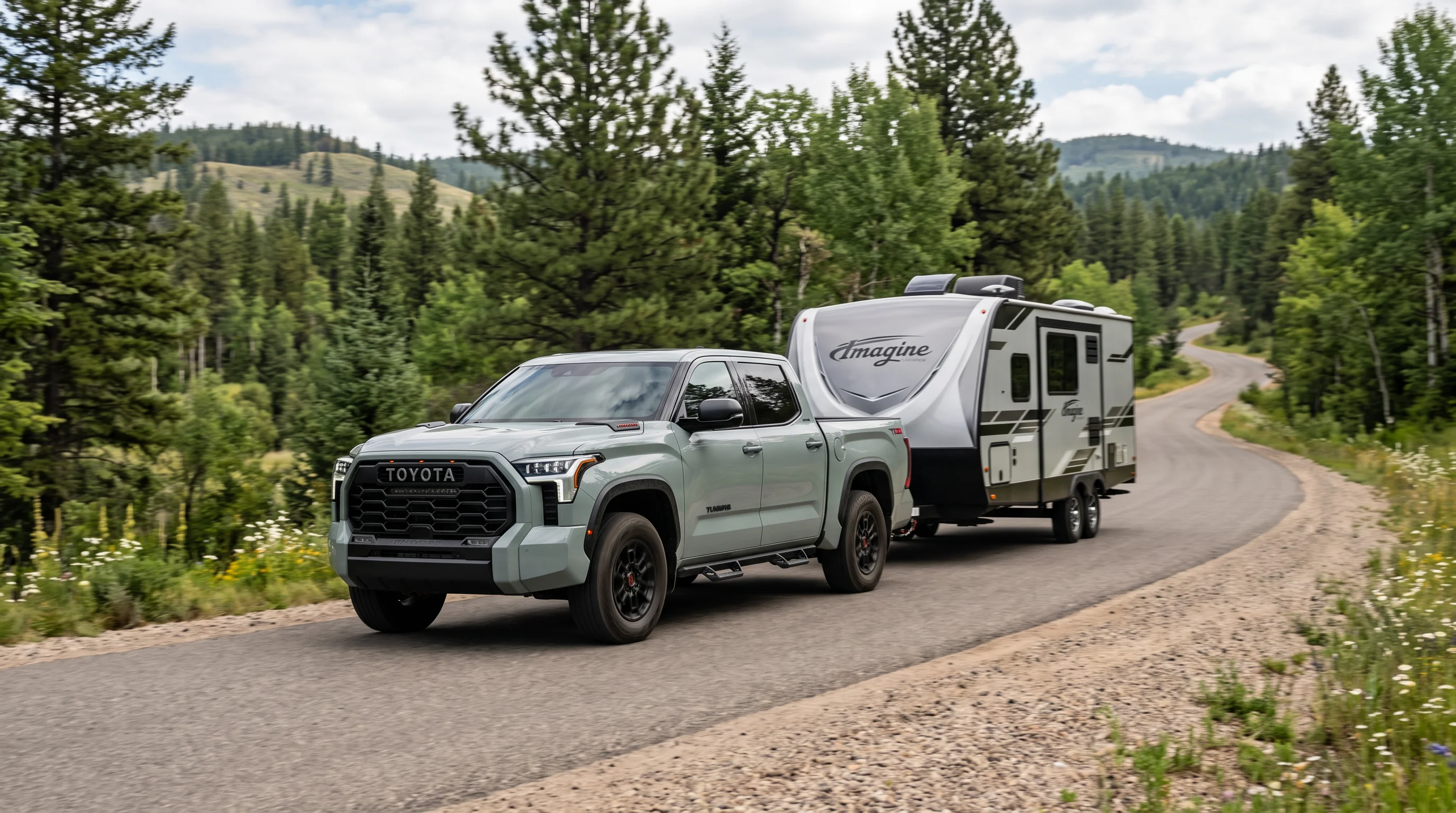
The 2026 Toyota Tundra tows up to 12,000 pounds when properly equipped. That number is a ceiling, not a lineup-wide rating. Real capacity runs from 8,300 to 12,000 pounds. Trim, engine, drivetrain, cab style, and bed length all move the figure. The gas i-FORCE V6 reaches the full 12,000 pounds in the right setup. That setup is the rear-wheel-drive SR5 Double Cab with the 6.5-foot bed. The i-FORCE MAX hybrid tops out at 11,450 pounds.
So many variables affect the rating that only one number truly governs your truck: the one on its door-jamb label. Not the one in the brochure. If you are matching a Tundra to a specific trailer, our sales team can walk the exact build with you first. Call (949) 779-5480 or visit us on Camino Capistrano.
i-FORCE vs. i-FORCE MAX: How Engine Choice Changes Your Tow Rating
The 2026 Tundra offers two twin-turbocharged 3.4-liter V6 powertrains. The trade-off between them is not what most shoppers expect.
i-FORCE (Gas)
- Horsepower: 389 hp
- Torque: 479 lb-ft
- SR grade tune: 348 hp and 405 lb-ft — the SR uses a lower-output version of the same engine
- Maximum towing: 12,000 lbs
- Availability: Standard on SR5, Limited, Platinum and 1794 Edition
i-FORCE MAX® (Hybrid)
- Horsepower: 437 hp net combined, at 5,200 rpm
- Torque: 583 lb-ft at 2,400 rpm
- Maximum towing: 11,450 lbs
- Availability: Standard on TRD Pro and Capstone; available on Limited, Platinum and 1794 Edition
The hybrid makes more power and much more torque. Yet it tows less. The reason is weight. The i-FORCE MAX adds a motor generator with a clutch, set in the bell housing between the engine and the 10-speed automatic. It adds a battery pack too. That extra curb weight comes straight out of the trailer-weight budget.
What the hybrid gives back is delivery. Both engines make peak torque at 2,400 rpm, so the difference is not where the curve peaks — it is the electric motor filling in below it. The motor generator adds torque the instant you touch the throttle, which means less downshifting on grades and a smoother pull away from a stop with a loaded trailer behind you. If you want the highest number on the spec sheet, the gas i-FORCE wins. If you care how the truck feels at 60 mph with 8,000 pounds behind it, the hybrid makes a strong case.
2026 Tundra Towing Capacity by Trim
Maximum ratings vary by trim because equipment weight varies by trim. Each figure below is that trim’s ceiling when properly equipped.
| Trim | Engine at Max Rating | Maximum Towing |
|---|---|---|
| SR | i-FORCE* | 8,300 lbs |
| SR5 | i-FORCE | 12,000 lbs |
| Limited | i-FORCE MAX | 11,450 lbs |
| Platinum | i-FORCE MAX | 11,380 lbs |
| 1794 Edition | i-FORCE | 11,310 lbs |
| TRD Pro | i-FORCE MAX | 11,175 lbs |
| Capstone | i-FORCE MAX | 10,340 lbs |
*The SR grade uses a lower-output tune of the i-FORCE V6, rated at 348 horsepower and 405 lb-ft of torque. Its 8,300-pound rating applies to every SR drivetrain, cab, and bed combination.
Two things stand out. First, the SR5 is the towing champion of the lineup — and it is not a top trim. It carries the least equipment weight among trims with the higher-output engine. Second, only 275 pounds separate the Limited from the TRD Pro. Most buyers choosing among mid- and upper-trim Tundras give up very little real capability — the Capstone is the outlier, trading 1,110 pounds against the Limited for its luxury equipment. For a full breakdown of what separates each grade, see our 2026 Toyota Tundra trim levels guide. To see what is on the ground right now, browse our new Tundra inventory.
Maximum towing and payload capacity figures are based on properly equipped vehicles and vary by configuration. Do not exceed any weight rating. See your owner’s manual and the vehicle’s door-jamb label for specific capacities.
Towing Equipment Standard on Every 2026 Tundra
For 2026, Toyota made the core towing hardware standard across the whole lineup. That includes the base SR grade. You do not have to buy up to a package to get hitched.
Integrated Tow Hitch Receiver
Standard on all grades. Factory-mounted, with no aftermarket bracketry required.
7-Pin/4-Pin Connector
Standard on all grades. Handles trailer lighting and electric brake connections with no aftermarket wiring.
Trailer-Sway Control
Standard on all grades. Applies brake pressure and reduces engine torque to help settle a trailer that starts to sway.
32.2-Gallon Fuel Tank
Now standard on every grade, adding fuel capacity so you stop less often when towing.
Beyond that standard hardware, selectable driving modes with TOW/HAUL are confirmed on SR5 and above. TOW/HAUL works through the 10-speed automatic, alongside sequential shift mode and uphill/downhill shift logic. It holds gears longer under load and adds engine braking on descents. An integrated trailer brake controller is standard on every trim except the entry-level SR. It lets you adjust trailer braking force from the driver’s seat and read it on the vehicle’s display. Trailer Backup Guide with Straight Path Assist is available on SR5 and above as part of the Tow Tech Package. It uses cameras and sensors to help keep a trailer tracking straight while you reverse. Load-leveling rear height control air suspension is available on the Platinum and 1794 Edition (i-FORCE and i-FORCE MAX) and on the Capstone. It adjusts rear ride height to keep the truck level under tongue weight.
Payload Capacity and Why It Often Runs Out First
Towing capacity tells you what the Tundra can pull. Payload tells you what it can carry. Payload is often the limit you hit first.
Payload varies widely across the lineup. Lighter configurations carry the most. Heavily equipped trims carry less, because premium interiors, sunroofs, and four-wheel-drive hardware all count against gross vehicle weight rating. Published maximum payload figures for the 2026 Tundra differ between sources. Treat the Tire and Loading Information label on your driver’s door jamb as the only number that governs your truck.
This matters when you tow. Trailer tongue weight rests on the rear axle, and it comes straight out of payload. As a general towing practice, tongue weight is planned at roughly 10 to 15 percent of total trailer weight; your owner’s manual and the vehicle’s door-jamb label govern the actual limits for your truck. On that basis, an 8,000-pound travel trailer puts roughly 800 to 1,200 pounds on the hitch — before a single passenger climbs in. Subtract that from your door-jamb payload figure. What is left is your real budget for people, gear, and bed cargo, and a family of four with equipment can use it up fast.
Exceeding the manufacturer’s weight ratings compromises braking, handling, and component life. Stay within the ratings on your door-jamb label. When you choose a trim, weigh cabin features against the cargo math of how you actually drive.
Maximum towing and payload capacity figures are based on properly equipped vehicles and vary by configuration. Do not exceed any weight rating. See your owner’s manual and the vehicle’s door-jamb label for specific capacities.
Double Cab or CrewMax: Balancing Capability and Space
The Tundra comes in two cab configurations. The Double Cab usually posts higher maximum towing and payload ratings, thanks to lower curb weight. The CrewMax trades some of that for much more rear-seat room. That is why it dominates among buyers who use the truck as a daily driver as well as a tow vehicle.
The practical point is that the gap rarely decides anything. A properly equipped CrewMax still tows up to 11,450 pounds. That covers most travel trailers, boats, and equipment loads. Unless you run near the 12,000-pound ceiling, pick your cab based on how you use the back seat.
Pre-Tow Checklist for Heavy Hauling
Operating near maximum limits rewards preparation. Load the trailer so its center of gravity sits slightly forward of the axles. That keeps tongue weight in range. On trailers over 5,000 pounds, use a weight-distribution hitch. It spreads load across both truck axles and improves steering and braking response.
Before every departure:
- Check tire pressure on both the truck and the trailer against manufacturer recommendations.
- Verify all trailer lights, including turn signals and brake lights, are functioning.
- Inspect the hitch connection, safety chains, and breakaway cable.
- Test the trailer brake controller at low speed to confirm the trailer brakes engage smoothly.
The information in this article is general guidance and does not constitute a specific diagnostic or repair recommendation for any individual vehicle. Repair and maintenance decisions should be made in consultation with a certified technician based on the specific condition of your vehicle.
Common Questions About Tundra Towing
Can I tow a fifth-wheel trailer with a 2026 Tundra?
While the Tundra tows up to 12,000 pounds, fifth-wheel and gooseneck trailers place a high percentage of their weight directly over the rear axle. That pin weight often exceeds the payload capacity of half-ton trucks. For safety, stick to conventional bumper-pull trailers, or talk with our sales team about calculating your exact axle weight limits.
Is an integrated trailer brake controller standard on the base SR trim?
No. The integrated trailer brake controller is standard on every 2026 Tundra trim except the entry-level SR. If you tow regularly, plan on SR5 or above.
What warranty covers the i-FORCE MAX hybrid components?
Toyota covers the hybrid battery for 10 years or 150,000 miles from date of first use, whichever comes first. Other hybrid system components are covered for 8 years or 100,000 miles. Every 2026 Tundra also carries a 36-month/36,000-mile basic warranty and a 60-month/60,000-mile powertrain warranty, plus ToyotaCare scheduled maintenance for 2 years or 25,000 miles.
This information is provided for general educational purposes only and does not constitute legal advice. Warranty coverage depends on the specific terms of your vehicle’s warranty agreement. Consult your owner’s manual or a qualified legal professional for guidance on your individual situation.
Does the Tundra require premium fuel when towing?
No. Both twin-turbo V6 powertrains are calibrated for regular unleaded gasoline, 87 octane or higher. Premium fuel is not required to reach the rated towing capacities or peak output figures.
How does the available air suspension affect towing?
The available load-leveling rear height control air suspension adjusts rear ride height based on tongue weight. Keeping the truck level maintains proper suspension geometry and headlight aim, and improves stability under load.
Find the Right Tundra Towing Setup at Capistrano Valley Toyota
Choosing a Tundra for towing starts with an honest look at three things: your trailer weight, your passenger needs, and how often you run near the limit. Our team can walk you through cab styles, bed lengths, and powertrain options. We will confirm the exact ratings on any truck on our lot before you sign anything.
Serving drivers across San Juan Capistrano, San Clemente, Dana Point, Mission Viejo, Ladera Ranch, and Trabuco Canyon. Explore more model guides in our Toyota research library.