


2026 Toyota bZ Electric Range and Charging: A Guide for Orange County Drivers
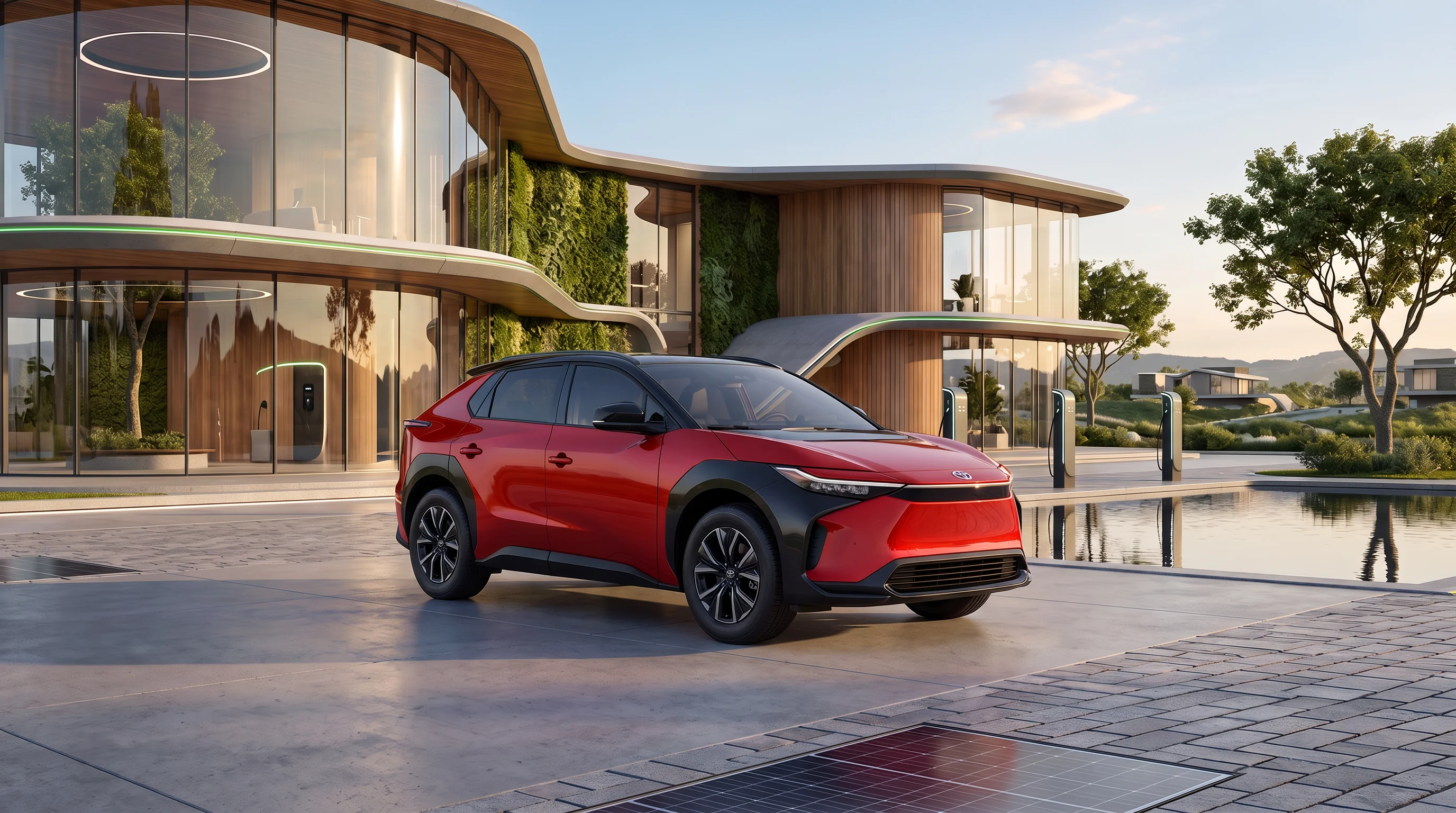
Two questions come first for most Southern California drivers shopping an electric SUV. How far does it go? And how do I keep it charged? The 2026 Toyota bZ answers both differently than the bZ4X it replaces. Toyota shortened the name. It also added a second battery size, upgraded the onboard charger, and switched to the same charging port Tesla Superchargers use.
This guide covers what those changes mean day to day in San Juan Capistrano and across south Orange County. We look at EPA-estimated range by configuration, real-world highway results, home charging setup, and how often you will actually need a public station. For a broader look at the vehicle, you can meet the 2026 Toyota bZ on our model page.
2026 Toyota bZ EPA-Estimated Range by Configuration
The bZ comes in two grades: XLE and Limited. The base XLE front-wheel-drive model uses a 57.7-kWh battery. Every other configuration steps up to a larger 74.7-kWh pack. Battery size and drivetrain both affect efficiency, so EPA-estimated range varies across the lineup.
| Configuration | Battery | EPA-Estimated Range |
|---|---|---|
| XLE FWD | 57.7 kWh | 236 miles |
| XLE FWD Plus | 74.7 kWh | 314 miles |
| XLE AWD | 74.7 kWh | 288 miles |
| Limited FWD | 74.7 kWh | 299 miles |
| Limited AWD | 74.7 kWh | 278 miles |
The XLE FWD Plus leads the lineup at an EPA-estimated 314 miles. That is a big step up from the 252-mile peak of the outgoing bZ4X. All-wheel-drive models trade some range for added traction. The XLE AWD is rated at 288 miles and the Limited AWD at 278 miles.
Plenty of local drivers commute between Aliso Viejo, Laguna Niguel, and job centers across Orange County. Even the shortest-range bZ covers a normal week of that driving on one charge. You can compare configurations in our new Toyota bZ inventory.
EPA-estimated fuel economy figures are for comparison purposes only. Your actual mileage will vary depending on driving conditions, how you drive and maintain your vehicle, battery age/condition, and other factors.
Real-World Highway Range in Southern California
EPA figures are a baseline, not a promise. Highway miles are harder on an electric SUV than city miles. Steady freeway speeds draw power without pause. Wind resistance climbs sharply as you go faster. There is also less braking, so there are fewer chances to send energy back to the battery.
What Independent Testing Showed
In the Edmunds EV range test, an XLE FWD Plus traveled 331 miles on a full charge. That is about 17 miles past its 314-mile EPA rating.
How Orange County Weather Affects Range
Climate matters too. Orange County weather is kind to EVs, but it is not free. AAA testing published in 2026 found that EVs lose about 8.5% of range and 10.4% of efficiency at 95 degrees compared with 75 degrees. That shows up on a hot inland afternoon. It is still far less than the hit cold-climate drivers take in winter.
Habits That Protect Highway Range
- Use the steering-wheel paddles to adjust regenerative braking and recover energy while slowing for traffic.
- Precondition the cabin while the vehicle is still plugged in, which shifts the most energy-intensive part of cooling off the battery.
- Keep tires properly inflated, since underinflated tires waste energy.
- Remove roof racks when they are not in use to reduce aerodynamic drag.
- Ease off above 70 mph, where drag increases sharply.
Setting Up Level 2 Home Charging for Your Toyota bZ
Most owners charge at home, overnight. Every 2026 bZ includes a dual-voltage charging cable. It works with a standard 120-volt household outlet (Level 1) and with a 240-volt outlet (Level 2).
How the Three Charging Levels Compare
| Charging Method | Power Delivery | Time to Charge |
|---|---|---|
| Level 1 (120V household outlet) | Included dual-voltage cable at 12 amps | About 50 hours (10% to 100%) |
| Level 2 (240V outlet or charger) | 11-kW onboard AC charger at 48 amps | About 7 hours (10% to 100%) |
| DC Fast Charging (public station) | Up to 150 kW through the NACS port | About 30 minutes (10% to 80%) |
Level 1 is a backup, not a plan. Level 2 is the practical choice for daily ownership. Plug in after dinner and wake up to a full battery. The previous bZ4X used a smaller onboard charger and needed closer to nine and a half hours for the same job.
What Level 2 Installation Requires
To use the included cable at Level 2, you need a 240-volt NEMA 14-50 outlet. Other home charging equipment works too. Toyota advises hiring a licensed electrician for the outlet or charger install. Before you book the work, check that your electrical panel can handle the added load.
Scheduling Charges for Off-Peak Rates
The bZ also lets you set a charging schedule. You can do it in the vehicle or through the Toyota app. That makes it easy to charge during off-peak utility hours.
How Often You Will Need Public Charging
If you have Level 2 charging at home, public charging is mostly a road-trip tool. It is not a weekly errand. Daily commutes, school runs, and local trips around Dana Point, San Clemente, and Ladera Ranch all fit inside a single charge on every configuration.
NACS and Tesla Supercharger Access
When you do charge in public, the 2026 bZ is a different car than its predecessor. It arrives with a native North American Charging System (NACS) port. That gives it direct access to more than 25,000 Tesla Supercharger plugs across North America, with no adapter needed. Toyota also includes adapters for older J1772 and CCS stations, so those networks stay open to you.
Fast Charging Speed and Plug and Charge
Peak DC fast charging is 150 kW. Toyota estimates a 10% to 80% charge takes about 30 minutes in ideal conditions. Battery preconditioning brings the pack to the right temperature before a session starts, which helps hold speeds steady. Plug & Charge is new for 2026. It starts the session on its own after a one-time setup in the Toyota app. The Tesla Supercharger network supports it first, with IONNA, ChargePoint, and EVgo to follow. Drivers using Apple CarPlay can also route through Apple Maps EV Routing. It factors battery level and elevation into charger stops along the way.
Where EV Incentives Stand in 2026
Incentives have shifted twice in the past year. The federal clean vehicle tax credits under IRC Section 30D were terminated by Public Law 119-21, enacted July 4, 2025. The change applies to vehicles acquired after September 30, 2025. No federal purchase credit is available for a new EV bought today. The federal home-charger credit expired June 30, 2026. California’s statewide Clean Vehicle Rebate Project also remains closed. The state has since built a replacement. Governor Newsom signed SB 168 in July 2026, creating MyFirstEV. It is a point-of-sale rebate for California residents buying or leasing their first zero-emission vehicle, and Toyota is one of the participating manufacturers. The California Air Resources Board opened the program in early August 2026, with participating automakers launching on a staggered schedule. Toyota’s launch is scheduled for September 2026. Confirm current terms before you buy. Local utility rebates may also apply.
Common Questions About 2026 Toyota bZ Range and Charging
What is the warranty on the 2026 Toyota bZ battery?
Toyota covers the EV battery and related drive components for 8 years or 100,000 miles, whichever comes first. The coverage also protects against abnormal loss of capacity, providing for a minimum of 70% of original battery capacity.
What roadside assistance comes with the bZ?
New bZ models include ToyotaCare, which covers normal factory scheduled maintenance for 2 years or 25,000 miles, whichever comes first, plus 24-hour Roadside Assistance for 3 years and unlimited miles. That roadside term is a year longer than the standard Toyota coverage. Assistance is reachable at 800-444-4195.
What safety features are standard on the 2026 Toyota bZ?
Toyota Safety Sense 3.0 is standard across the lineup. The suite includes Pre-Collision System with Pedestrian Detection, Full-Speed Range Dynamic Radar Cruise Control, Lane Departure Alert with Steering Assist, Lane Tracing Assist, Road Sign Assist, Automatic High Beams, and Proactive Driving Assist.
Does the 2026 Toyota bZ support scheduled charging?
Yes. You can set a charging schedule through the vehicle or the Toyota app, which lets you take advantage of lower off-peak electricity rates and keeps the vehicle ready in the morning.
This information is provided for general educational purposes only and does not constitute legal advice. Warranty coverage depends on the specific terms of your vehicle’s warranty agreement. Consult your owner’s manual or a qualified legal professional for guidance on your individual situation.
See the 2026 Toyota bZ at Capistrano Valley Toyota
Capistrano Valley Toyota is at 33395 Camino Capistrano in San Juan Capistrano. We serve drivers throughout south Orange County. Stop by to see the 2026 bZ in person and take one for a test drive. You can also call our sales team at 949-779-5480 with questions about range, charging, or which configuration fits your driving.
Disclaimers
Range and efficiency: EPA-estimated fuel economy figures are for comparison purposes only. Your actual mileage will vary depending on driving conditions, how you drive and maintain your vehicle, battery age/condition, and other factors.
Warranty and coverage: This information is provided for general educational purposes only and does not constitute legal advice. Warranty coverage depends on the specific terms of your vehicle’s warranty agreement. Consult your owner’s manual or a qualified legal professional for guidance on your individual situation.