


2026 Toyota Tundra i-FORCE MAX Hybrid: EPA-Estimated MPG, Performance, and Towing
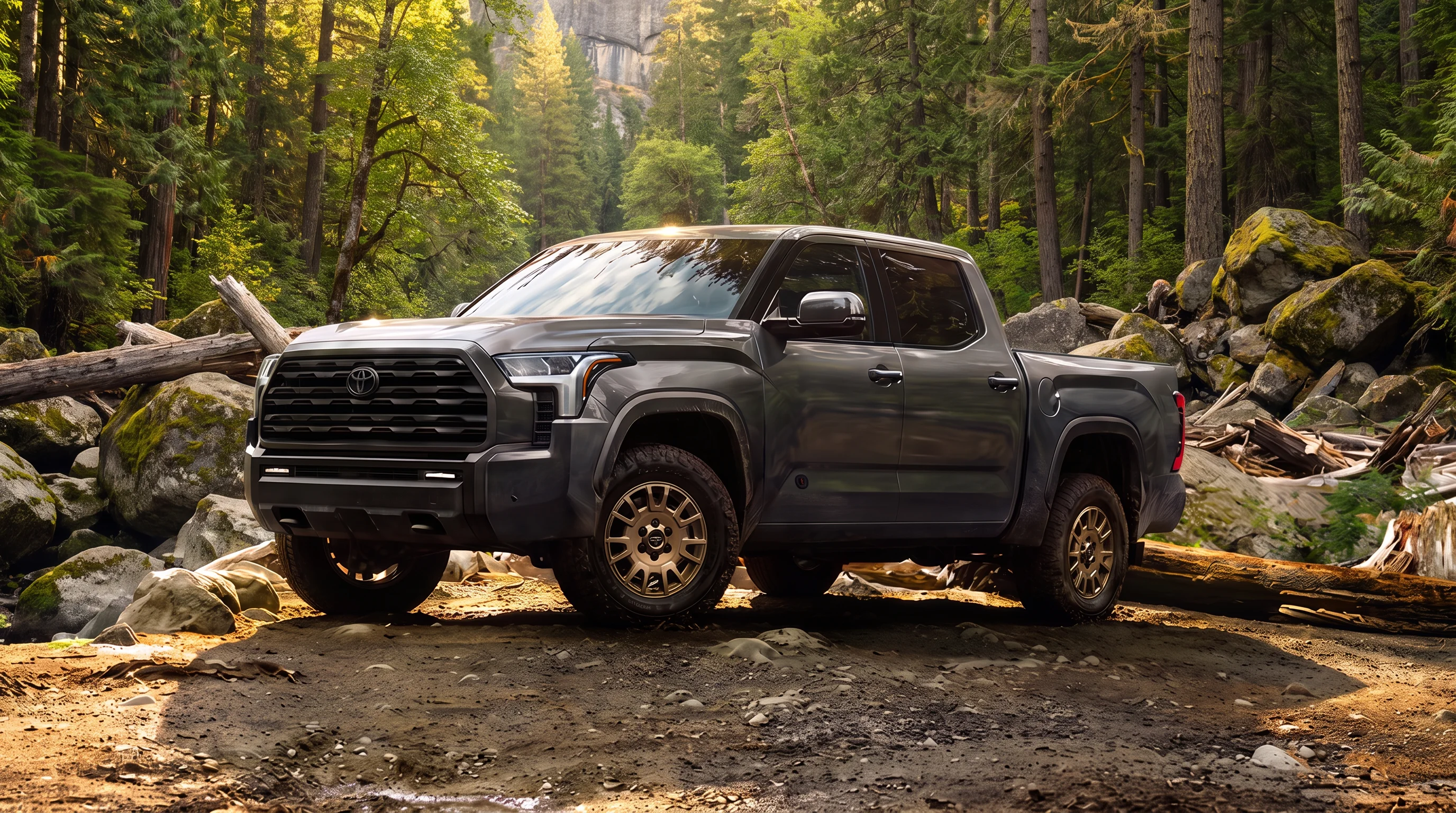
The 2026 Toyota Tundra i-FORCE MAX hybrid earns an EPA-estimated 20 mpg city / 24 mpg highway / 22 mpg combined in rear-wheel-drive configurations. Most four-wheel-drive i-FORCE MAX configurations are rated at an EPA-estimated 19 mpg city / 22 mpg highway / 20 mpg combined, while the off-road-focused TRD Pro is rated at an EPA-estimated 18 mpg city / 20 mpg highway / 19 mpg combined.
| Configuration | EPA-Est. City | EPA-Est. Hwy | EPA-Est. Combined |
|---|---|---|---|
| i-FORCE MAX Hybrid 4×2 | 20 mpg | 24 mpg | 22 mpg |
| i-FORCE MAX Hybrid 4×4 | 19 mpg | 22 mpg | 20 mpg |
| i-FORCE MAX Hybrid TRD Pro 4×4 | 18 mpg | 20 mpg | 19 mpg |
| i-FORCE Gas V6 4×2 | 18 mpg | 23 mpg | 20 mpg |
Every 2026 Tundra carries a standard 32.2-gallon fuel tank, and the i-FORCE MAX pairs that capacity with Toyota's twin-turbo V6 hybrid powertrain.
Real-world results across Orange County vary with driving style, cargo loads, and terrain. On the foothill climbs and dirt access roads around Trabuco Canyon, the hybrid's electric motor adds low-end torque during low-speed ascents, reducing the demand on the twin-turbo gasoline engine.
If you're planning your next truck purchase, reach out to our team at (949) 779-5480 or stop by our San Juan Capistrano showroom to discuss current inventory.
EPA-estimated fuel economy figures are for comparison purposes only. Your actual mileage will vary depending on driving conditions, how you drive and maintain your vehicle, battery age/condition, and other factors.
How the i-FORCE MAX Hybrid Powertrain Works in the Toyota Tundra
The i-FORCE MAX combines a twin-turbocharged 3.4-liter V6 with a motor generator and clutch located in the bell housing between the engine and the 10-speed automatic transmission, producing 437 net combined horsepower and 583 lb-ft of torque.
| Engine | Twin-turbocharged 3.4L V6 hybrid |
|---|---|
| Transmission | 10-speed automatic |
| Combined Output | 437 hp / 583 lb-ft |
| Hybrid Battery | 288-volt sealed nickel-metal hydride |
| Recommended Fuel | Regular 87-octane unleaded |
| Fuel Tank | 32.2 gallons |
Toyota built this system to deliver full-size truck performance rather than commuter-car economy. Because the motor generator sends power through the transmission, the hybrid components handle engine start-up, EV driving, electric assist, and energy regeneration. When you accelerate from a stop, the electric motor adds low-end torque while the twin turbochargers build boost, helping smooth out power delivery.
Electrical energy is stored in a 288-volt sealed nickel-metal hydride battery pack mounted beneath the rear passenger seats. The system never needs to be plugged in; it manages battery charge on its own through normal driving. The engine also runs on regular 87-octane unleaded fuel, so you avoid the added cost of premium at the pump.
First-time hybrid truck shoppers exploring our new Toyota Tundra inventory often ask whether the i-FORCE MAX requires different driving habits. In day-to-day operation, it drives like a traditional high-output gas truck, automatically deciding when to use electric power, blended gas-electric power, or gasoline power alone.
Regenerative Braking and Drive Modes That Help the Tundra Hybrid Save Fuel
Regenerative braking recovers energy by using the motor generator as a generator during coasting and braking, while selectable drive modes let you adjust throttle response to match the conditions.
During deceleration, the wheels turn the motor generator, creating resistance that helps slow the truck while generating electrical current. That energy is fed back into the 288-volt battery pack instead of being lost as heat through the friction brakes.
You can further tailor how the truck responds through its selectable drive modes:
Eco Mode
Smooths throttle response to soften sudden acceleration inputs and help maximize efficiency.
Normal Mode
Balances throttle response and power delivery for everyday driving.
Sport Mode
Sharpens accelerator response, placing performance ahead of efficiency.
Tow/Haul Mode
Adjusts transmission shift behavior for towing and hauling heavy loads.
Around Mission Viejo, where a master-planned street network winds through rolling hills, frequent stops and grade changes give regenerative braking regular opportunities to recover energy and keep the hybrid battery charged.
How Towing Affects the Tundra Hybrid’s Estimated Fuel Economy
Towing a heavy trailer near the i-FORCE MAX's maximum rating reduces how far the Tundra travels on each gallon, depending on trailer weight, frontal area, and road grade.
The i-FORCE MAX delivers immediate pull with 583 lb-ft of torque, but heavy loads require sustained output from the gasoline engine. When towing trailers, boats, or campers approaching the i-FORCE MAX's maximum rating of up to 11,450 lbs. (Limited i-FORCE MAX 4×2 CrewMax with 5.5-ft. bed, properly equipped), the engine stays engaged almost continuously, which limits opportunities for the hybrid system to shut off the engine or coast on electric power alone. The lineup's 12,000-lb. maximum belongs to gas i-FORCE configurations.
Aerodynamic drag plays an equally important role at highway speeds. A tall, enclosed box trailer creates significant air resistance that requires steady throttle input, while heavy cargo carried in the bed generally has a smaller effect on highway mileage. Tow/Haul mode helps the transmission select appropriate gears and avoid gear hunting under load. For ratings across every cab, bed, and drivetrain combination, see our 2026 Toyota Tundra towing capacity guide.
EPA-estimated fuel economy figures are for comparison purposes only. Your actual mileage will vary depending on driving conditions, how you drive and maintain your vehicle, battery age/condition, and other factors.
Maximum towing and payload capacity figures are based on properly equipped vehicles and vary by configuration. Do not exceed any weight rating. See your owner’s manual and the vehicle’s door-jamb label for specific capacities.
2026 Tundra Trims Offering the i-FORCE MAX Hybrid Powertrain
Toyota makes the i-FORCE MAX standard on the TRD Pro and Capstone and offers it as an available powertrain on the Limited, Platinum, and 1794 Edition.
Standard i-FORCE MAX
TRD Pro and Capstone.
Available i-FORCE MAX
Limited, Platinum, and 1794 Edition.
Gas i-FORCE Only
SR and SR5.
Choosing the hybrid brings more horsepower and low-end torque, and the 2026 Tundra also offers an available 120V/400W AC outlet to keep jobsite tools, camping gear, or tailgating essentials powered. To compare equipment grade by grade, explore our 2026 Toyota Tundra trim levels guide.
Toyota supports its hybrid trucks with long-term factory coverage. The hybrid battery is covered for 10 years from the original date of first use or 150,000 miles, whichever comes first, and that coverage extends to subsequent owners. Other hybrid system components are covered for 8 years/100,000 miles, alongside Toyota's 60-month/60,000-mile powertrain coverage.
Source: Toyota Warranty & Owner's Manuals (toyota.com)
This information is provided for general educational purposes only and does not constitute legal advice. Warranty coverage depends on the specific terms of your vehicle’s warranty agreement. Consult your owner’s manual or a qualified legal professional for guidance on your individual situation.
Frequently Asked Questions About 2026 Tundra i-FORCE MAX Estimated MPG
Does the 2026 Tundra i-FORCE MAX require premium fuel?
No. The 2026 Toyota Tundra i-FORCE MAX runs on regular 87-octane unleaded gasoline, so premium fuel is not required.
What is the EPA-estimated MPG of the Tundra i-FORCE MAX with four-wheel drive?
Most four-wheel-drive i-FORCE MAX configurations earn an EPA-estimated 19 mpg city / 22 mpg highway / 20 mpg combined. The TRD Pro, which comes standard with the i-FORCE MAX and four-wheel drive, is rated at an EPA-estimated 18 mpg city / 20 mpg highway / 19 mpg combined.
How does the Tundra hybrid’s estimated fuel economy compare to the non-hybrid Tundra?
Both powertrains use a twin-turbo V6, but the i-FORCE MAX produces significantly more power: 437 hp and 583 lb-ft of torque, versus 389 hp and 479 lb-ft for the gas i-FORCE V6 on SR5 and higher grades. In rear-wheel-drive configurations, the hybrid improves city mileage by an estimated 2 mpg, with an EPA-estimated 20 mpg city compared with an EPA-estimated 18 mpg city for the gas i-FORCE.
EPA-estimated fuel economy figures are for comparison purposes only. Your actual mileage will vary depending on driving conditions, how you drive and maintain your vehicle, battery age/condition, and other factors.
Explore the 2026 Toyota Tundra i-FORCE MAX at Capistrano Valley Toyota
The 2026 Toyota Tundra i-FORCE MAX combines full-size capability with instant twin-turbo hybrid performance. Whether you tow for work or take long highway trips, the Tundra hybrid provides power when you need it.
Our sales team at Capistrano Valley Toyota can walk you through 2026 Tundra configurations and help you compare trim levels to match your driving needs. If you're weighing a full-size truck against a midsize pickup, our Toyota Tacoma vs. Toyota Tundra comparison breaks down the differences.
Get in touch with our team today by calling (949) 779-5480, or visit our dealership in San Juan Capistrano to take a test drive.
Disclaimers
EPA-estimated fuel economy figures are for comparison purposes only. Your actual mileage will vary depending on driving conditions, how you drive and maintain your vehicle, battery age/condition, and other factors.
Maximum towing and payload capacity figures are based on properly equipped vehicles and vary by configuration. Do not exceed any weight rating. See your owner’s manual and the vehicle’s door-jamb label for specific capacities.
This information is provided for general educational purposes only and does not constitute legal advice. Warranty coverage depends on the specific terms of your vehicle’s warranty agreement. Consult your owner’s manual or a qualified legal professional for guidance on your individual situation.