


Hybrid vs. Plug-In Hybrid vs. Electric: Which Toyota Powertrain Fits Your Drive?
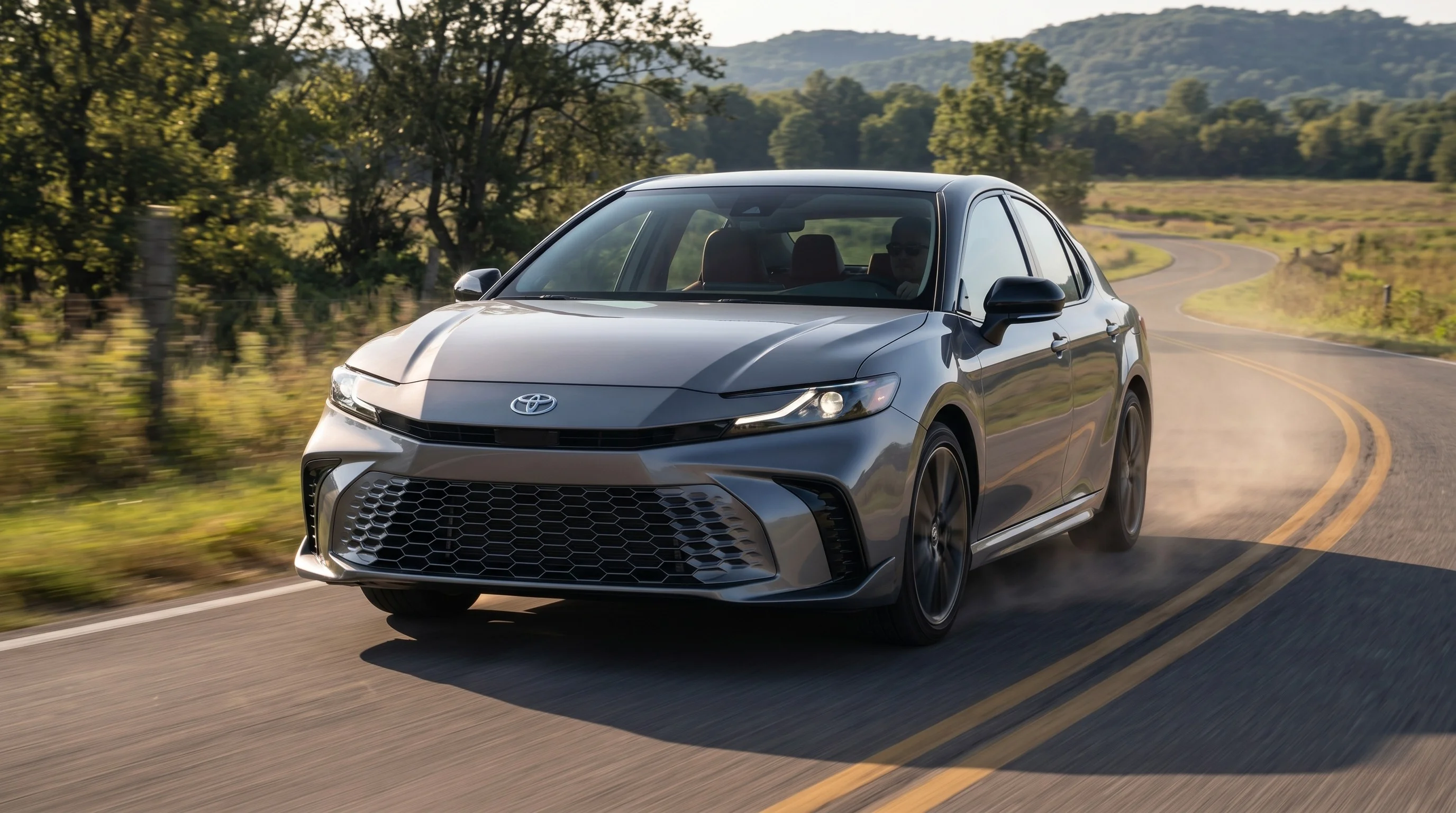
Choosing a new Toyota is no longer only about trim and color. It is about how the vehicle is powered. Toyota offers three electrified paths: hybrid (HEV), plug-in hybrid (PHEV), and battery electric (BEV). Each one balances gasoline efficiency and electric capability differently, and the right choice depends on how you actually drive.
A hybrid pairs a gasoline engine with an electric motor and a small battery that charges itself, so you never plug it in. A plug-in hybrid adds a larger battery and a stronger electric motor. That lets you drive on electricity alone for daily trips, then switch to hybrid operation once the battery runs low. A battery electric vehicle, like the Toyota bZ, removes the gasoline engine entirely and runs purely on electric power.
The best fit comes down to your daily routine, whether you can charge at home, and what you expect from performance. Here is how each system works, using current Toyota models as examples.
Hybrid vs. Plug-In Hybrid vs. Electric at a Glance
| Powertrain | Plug in to charge? | Electric-only driving | Gas engine on board? | Best for |
|---|---|---|---|---|
| Hybrid (HEV) | No — self-charging | Brief electric assist; no dedicated EV range | Yes | Maximum simplicity and strong MPG with no charging habits |
| Plug-in Hybrid (PHEV) | Yes (optional) | Yes — daily commute on electricity, then hybrid | Yes | Short electric commutes plus long-trip flexibility, no range anxiety |
| Battery Electric (BEV) | Yes (required) | Yes — 100% electric | No | Zero tailpipe emissions and home charging for mostly in-range driving |
How a Toyota Hybrid Works
A Toyota hybrid blends a gasoline engine with electric motor-generators, constantly choosing the most efficient mix of the two. At low speeds or under light acceleration it can run on electricity alone. Press harder and the gas engine joins in. The 2026 Prius, for example, uses a 2.0L engine paired with an eCVT for a combined 194 horsepower in front-wheel drive.
These vehicles never need to be plugged in, thanks to regenerative braking. When you coast or brake, the electric motors act as generators, capturing energy that would otherwise be lost as heat and sending it back to the battery. That recovered energy is a big part of why hybrids post such strong fuel economy.
The 2026 RAV4 Hybrid shows how the system scales up to an SUV. Its fifth-generation hybrid setup uses a 2.5L engine to produce 226 combined horsepower in front-wheel drive, or 236 horsepower with Electronic On-Demand All-Wheel Drive. It delivers real SUV utility with fuel economy that gas-only models cannot match.
How a Toyota Plug-In Hybrid Works
A plug-in hybrid is the middle ground for drivers who want electric driving without giving up long-range gasoline flexibility. The 2026 RAV4 Plug-in Hybrid pairs the 2.5L engine with a larger battery and three electric motors to make 324 net combined horsepower. On the SE grade, it offers up to an EPA-estimated 54 miles of all-electric range. With a full charge, it starts in EV mode and drives like an electric vehicle. Once the battery is depleted, it automatically continues as a standard hybrid.
The 2026 Prius Plug-in Hybrid, formerly the Prius Prime, works the same way. On the SE grade, it offers up to an EPA-estimated 44 miles of electric range before switching to efficient hybrid operation. You can charge it overnight on a standard 120-volt household outlet, or in about four hours on a 240-volt Level 2 charger.
For families running errands and school drop-offs in suburban communities like Mission Viejo, a plug-in hybrid can cover most short local trips on electricity alone, then handle a longer road trip without a second thought.
EPA-estimated fuel economy figures are for comparison purposes only. Your actual mileage will vary depending on driving conditions, how you drive and maintain your vehicle, battery age/condition, and other factors.
How a Toyota Battery Electric Vehicle Works
A battery electric vehicle removes the gasoline engine completely, running on electric motors and a large battery for smooth, quiet, tailpipe-emission-free driving. The all-electric Toyota bZ, formerly the bZ4X, is Toyota’s BEV for 2026. It comes with a 57.7-kWh battery on the base configuration, or a larger 74.7-kWh battery on higher grades. That larger pack delivers an EPA-estimated range of up to 314 miles. The 2026 bZ uses a native North American Charging System (NACS) port, giving it direct access to thousands of public fast-chargers, including the Tesla Supercharger network.
EPA-estimated fuel economy figures are for comparison purposes only. Your actual mileage will vary depending on driving conditions, how you drive and maintain your vehicle, battery age/condition, and other factors.
Comparing Maintenance, Charging, and Ownership
Hybrids and plug-in hybrids still have a gasoline engine, so they need routine engine maintenance such as oil changes and filter checks. But because the electric motors handle much of the braking, brake components often last longer than on a conventional gas vehicle. Follow Toyota’s recommended maintenance intervals to keep any electrified powertrain performing at its best.
A battery electric vehicle like the bZ has no gasoline engine, which eliminates oil changes, spark plugs, and emissions testing. BEV maintenance centers on tires, cabin filters, and fluid checks, and that can lower scheduled maintenance costs over the life of the vehicle.
Battery coverage is a common question. Toyota hybrids and plug-in hybrids carry a 10-year/150,000-mile hybrid battery warranty on 2020 and newer models, while the bZ’s EV drive components, including the traction battery, are covered for 8 years or 100,000 miles. Charging a plug-in hybrid or EV at home during off-peak hours is generally cheaper per mile than buying gasoline, and standard hybrids stay very economical thanks to their fuel efficiency.
This information is provided for general educational purposes only and does not constitute legal advice. Warranty coverage depends on the specific terms of your vehicle’s warranty agreement. Consult your owner’s manual or a qualified legal professional for guidance on your individual situation.
Electrification Without Compromise
Electrified does not mean less capable. Toyota’s i-FORCE MAX hybrid pairs a turbocharged engine with an electric motor for serious output. In the 2026 Tacoma it produces 326 horsepower and 465 lb-ft of torque, and properly equipped i-FORCE MAX models tow up to 6,000 pounds. The 2026 Sequoia comes standard with i-FORCE MAX, delivering 437 horsepower and a maximum towing capacity of up to 9,520 pounds when properly equipped. That is proof hybrid power can handle demanding jobs as easily as it saves fuel.
Maximum towing and payload capacity figures are based on properly equipped vehicles and vary by configuration. Do not exceed any weight rating. See your owner’s manual and the vehicle’s door-jamb label for specific capacities.
Common Questions About Toyota Electrified Powertrains
Do I need to install a special charging station for a Toyota plug-in hybrid?
No. Every Toyota plug-in hybrid includes a charging cable that plugs into a standard 120-volt household outlet, which can charge the battery overnight. If you want faster charging, a 240-volt Level 2 charger can be professionally installed.
Can I still drive a Toyota plug-in hybrid if I forget to charge it?
Yes. Once the electric charge is used up, the vehicle automatically runs as a conventional hybrid on its gasoline engine, so there is no range anxiety. It stays just as convenient on long road trips.
How does cold weather affect a Toyota EV’s range?
Cold temperatures can temporarily reduce battery efficiency and increase energy use for cabin heating, so your EPA-estimated range may drop in colder conditions. In a mild coastal climate, owners typically see much smaller seasonal range changes than drivers in cold-winter regions.
Are there federal tax credits available for a new Toyota EV or plug-in hybrid?
No. The federal clean vehicle tax credits under IRC §30D, §25E, and §45W (as amended by the One Big Beautiful Bill Act, Pub. L. 119-21) were terminated for vehicles acquired after September 30, 2025 (see the IRS Clean Vehicle Tax Credits page). The only exception is a vehicle acquired on or before that date under a binding written contract. Confirm your specific eligibility and timing with a qualified tax professional.
Do Toyota hybrid batteries charge themselves while driving?
Yes. Conventional Toyota hybrids recharge their own batteries using regenerative braking during deceleration, and they can also use the gasoline engine as a generator. That self-charging design is why standard hybrids never need to be plugged in.
Find Your Electrified Toyota
Whether you want the simplicity of a self-charging hybrid, the flexibility of a plug-in hybrid, or the all-electric experience of the bZ, there is an electrified Toyota built for your routine. The best way to feel the difference is to compare them back-to-back. Explore Toyota’s electrified lineup to see what fits your drive.
Disclaimers
EPA-estimated fuel economy figures are for comparison purposes only. Your actual mileage will vary depending on driving conditions, how you drive and maintain your vehicle, battery age/condition, and other factors.
Maximum towing and payload capacity figures are based on properly equipped vehicles and vary by configuration. Do not exceed any weight rating. See your owner’s manual and the vehicle’s door-jamb label for specific capacities.
This information is provided for general educational purposes only and does not constitute legal advice. Warranty coverage depends on the specific terms of your vehicle’s warranty agreement. Consult your owner’s manual or a qualified legal professional for guidance on your individual situation.
0 comment(s) so far on Hybrid vs. Plug-In Hybrid vs. Electric: Which Toyota Powertrain Fits Your Drive?