


How Toyota Plug-In Hybrids Work: PHEV Charging and Range Explained
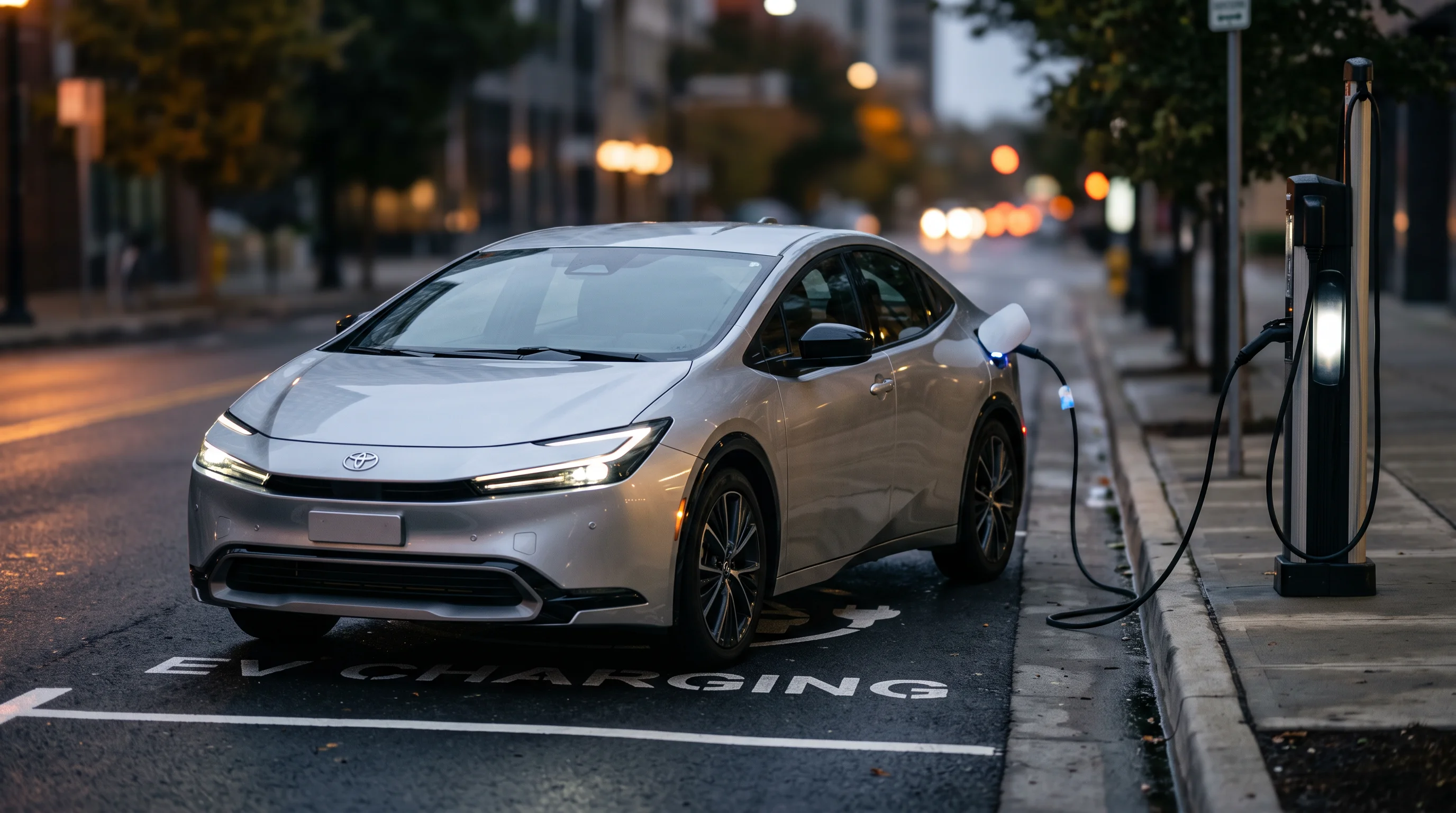
A Toyota plug-in hybrid (PHEV) runs on two energy sources. Understanding how they hand off to each other is the key to getting the most out of one. Every Toyota PHEV pairs a lithium-ion battery with a gasoline engine and electric motors. The difference from a standard hybrid is size. A plug-in carries a much bigger battery and stronger electric motors. That is enough to drive on electricity alone for real distances, before the gasoline engine ever starts.
That changes how the vehicle behaves day to day. On the foothill grades toward Trabuco Canyon, a PHEV delivers instant electric torque and burns no fuel. The system adjusts the balance between engine and motors as you drive. When the battery is charged, you run on electricity. When that charge runs out, the vehicle switches to hybrid operation on its own and keeps going.
One question comes up more than any other. Does a plug-in hybrid have to be plugged in to run? No. Plugging in is what maximizes your electric driving. But the vehicle runs fine on gasoline alone.
EV Mode, HV Mode, and Charge Mode: How Toyota PHEVs Manage Energy
Toyota plug-in hybrids let you decide how the vehicle spends its energy. You are not stuck with whatever the computer picks. Choose a mode that matches the road ahead: electric power for city streets, hybrid operation for the highway, or engine-driven charging when you want battery capacity back.
| Mode | What It Does | Best Suited For |
|---|---|---|
| EV Mode | Drives on electricity stored in the battery | Local errands, neighborhood driving, short commutes with charging available |
| HV Mode | Uses the gasoline engine and electric motor together, conserving battery charge | Highway driving and uphill climbs — the conditions Toyota recommends it for, to save battery for later |
| AUTO EV/HV Mode | Prioritizes electric driving, but starts the engine when more power is needed | Mixed driving where you want the system to decide |
| Traction Battery Charge Mode | Runs the gasoline engine to generate electricity and recharge the battery | Rebuilding battery charge on the move; maximum charge is approximately 80% of the capacity reached when charging from an external power source |
EV Mode is quiet and produces no tailpipe emissions. It works at highway speeds, too. Electric driving cancels automatically above approximately 84 mph, per Toyota’s RAV4 Plug-in Hybrid owner’s manual quick guide. It also pauses briefly when you accelerate hard, when the heater runs in very cold weather, or when the defogger is on.
HV Mode is the counterpart. Toyota recommends switching to HV on the highway and on climbs, which saves battery power for city streets later in the trip. AUTO EV/HV Mode splits the difference. It leans on electric power, then calls up the gasoline engine when you need strong acceleration — merging onto a fast freeway, for example.
Do Toyota Plug-In Hybrids Charge While Driving?
Yes. Toyota PHEVs recover and store electricity as you drive. You can also tell the gasoline engine to charge the battery on demand.
The main method is regenerative braking. Lift off the accelerator or press the brake, and the electric motors flip roles and act as generators. A conventional car sheds that energy as heat through the brakes. Here, the system converts it back into electricity and sends it to the battery. This happens every time you slow down, which makes stop-and-go traffic surprisingly productive.
The second method is traction battery charge mode. Press and hold the EV/HV mode switch, and the gasoline engine starts generating electricity for the battery. This burns more fuel, and it has a ceiling. Toyota caps charge mode at approximately 80% of the capacity you would reach by charging from an external power source, per Toyota’s owner’s manual quick guide. Treat it as a way to rebuild usable range mid-trip, not a replacement for plugging in.
Plug-In Hybrid or Traditional Hybrid for a Highway Commute?
For a daily highway commute, it comes down to distance and charging access. Does your round trip fit inside the PHEV’s EPA-estimated electric range? Can you recharge overnight? If both answers are yes, the plug-in is almost always the cheaper choice. Many local commuters finish a full day of driving without using gasoline. The 2027 Prius Plug-in Hybrid is rated at up to an EPA-estimated 44 miles of all-electric range on the SE grade, per EPA estimates.
If you cannot charge at home or work, the math shifts. An uncharged plug-in hauls around a large battery it never uses. Its EPA-estimated gasoline-mode fuel economy trails a comparable standard hybrid. Without reliable outlet access, a traditional hybrid like the Camry makes more sense: strong EPA-estimated fuel economy, nothing to plug in.
Range is only part of the decision. Hybrid, plug-in hybrid, and all-electric each suit a different driver — see how Toyota’s three electrified powertrains compare before you narrow the field.
EPA-estimated fuel economy figures are for comparison purposes only. Your actual mileage will vary depending on driving conditions, how you drive and maintain your vehicle, battery age/condition, and other factors.
Toyota RAV4 Plug-in Hybrid Battery Size and Charging Speeds
Battery capacity drives how far a plug-in hybrid travels on electricity. The 2026 RAV4 Plug-in Hybrid uses a 22.7-kWh lithium-ion pack. EPA-estimated electric range varies by grade, with the SE leading the lineup at up to an EPA-estimated 54 miles of all-electric range. The Woodland is rated at a manufacturer-estimated 49 miles and the GR SPORT at a manufacturer-estimated 48 miles. A traditional Toyota hybrid cannot come close. Standard hybrid batteries are built to assist the engine, not to power the vehicle on their own.
Charging depends on the grade you choose. The 2026 RAV4 Plug-in Hybrid comes in four trims: SE, Woodland, XSE, and GR SPORT. They split across two charging setups, per Toyota’s specifications. Every grade includes a dual-voltage cable for 120V or 240V home charging.
| Grades | Onboard AC Charger | Charging Port | Level 2 (10%–80%) | DC Fast Charging |
|---|---|---|---|---|
| SE, GR SPORT | 7 kW | J1772 | About 4 hours | Not available |
| XSE, Woodland | 11 kW | CCS1 | — | 10%–80% in about 30 minutes |
A standard 120-volt outlet works for slow overnight trickle charging. It is best for topping off small amounts of EPA-estimated range. For daily drivers, a 240-volt Level 2 setup is the practical choice. The XSE and Woodland add something unusual for a plug-in hybrid — a CCS1 port with DC fast charging. That makes a real midday top-up possible.
Accepting an external charge is the core difference between a plug-in hybrid and a regular hybrid. Standard hybrids have no charge port at all. They rely entirely on the engine and regenerative braking to maintain a much smaller battery. If charging away from home is your concern, it helps to know where to charge an EV or plug-in hybrid in South Orange County.
EPA-estimated fuel economy figures are for comparison purposes only. Your actual mileage will vary depending on driving conditions, how you drive and maintain your vehicle, battery age/condition, and other factors.
Specifications, grade availability, and range and charging figures are preliminary and subject to change. All figures per Toyota’s published specifications. Charging times are estimates only and vary with weather conditions and other factors.
Common Questions About Toyota Plug-In Hybrid Technology
Do Toyota plug-in hybrids need to be plugged in to operate?
No. A Toyota plug-in hybrid does not require external charging to run. If you choose not to plug it in, the vehicle operates as an efficient standard hybrid, using the gasoline engine and regenerative braking to power your drives.
How do you decide if a Toyota plug-in hybrid is financially worth it?
It depends on how many of your miles can run on electricity instead of gasoline. If your daily trips stay within the EPA-estimated electric range and you charge at home regularly, the fuel savings work against the higher initial purchase price over time.
Does a Toyota plug-in hybrid qualify for any active federal tax credits?
No. Federal clean vehicle tax credits under IRC §30D were terminated for vehicles acquired after September 30, 2025 by the One Big Beautiful Bill Act (Public Law 119-21), per IRS guidance. Confirm your specific situation with your tax preparer.
What happens if the hybrid battery runs out of charge while driving?
When the electricity available for EV driving is used up, the vehicle automatically switches into HV mode. The gasoline engine takes over seamlessly and maintains a baseline charge, so you are never stranded.
Can extreme weather affect the electric range of a Toyota plug-in hybrid?
Yes. Temperature extremes temporarily reduce battery efficiency, so real-world driving range can fall short of the EPA-estimated rating. Because temperatures in San Juan Capistrano rarely approach freezing, local owners typically see far less range loss than drivers in cold-winter regions.
EPA-estimated fuel economy figures are for comparison purposes only. Your actual mileage will vary depending on driving conditions, how you drive and maintain your vehicle, battery age/condition, and other factors.
Finding the Right Electrified Toyota
Choosing an electrified vehicle comes down to three things: your daily routine, your charging access, and what you want from the drive. Toyota’s plug-in hybrid technology suits drivers who want electric driving without giving up long-distance freedom. Whether that points you toward the Prius Plug-in Hybrid or the RAV4 Plug-in Hybrid, the choice comes down to range, charging speed, and which vehicle fits your week.
0 comment(s) so far on How Toyota Plug-In Hybrids Work: PHEV Charging and Range Explained